
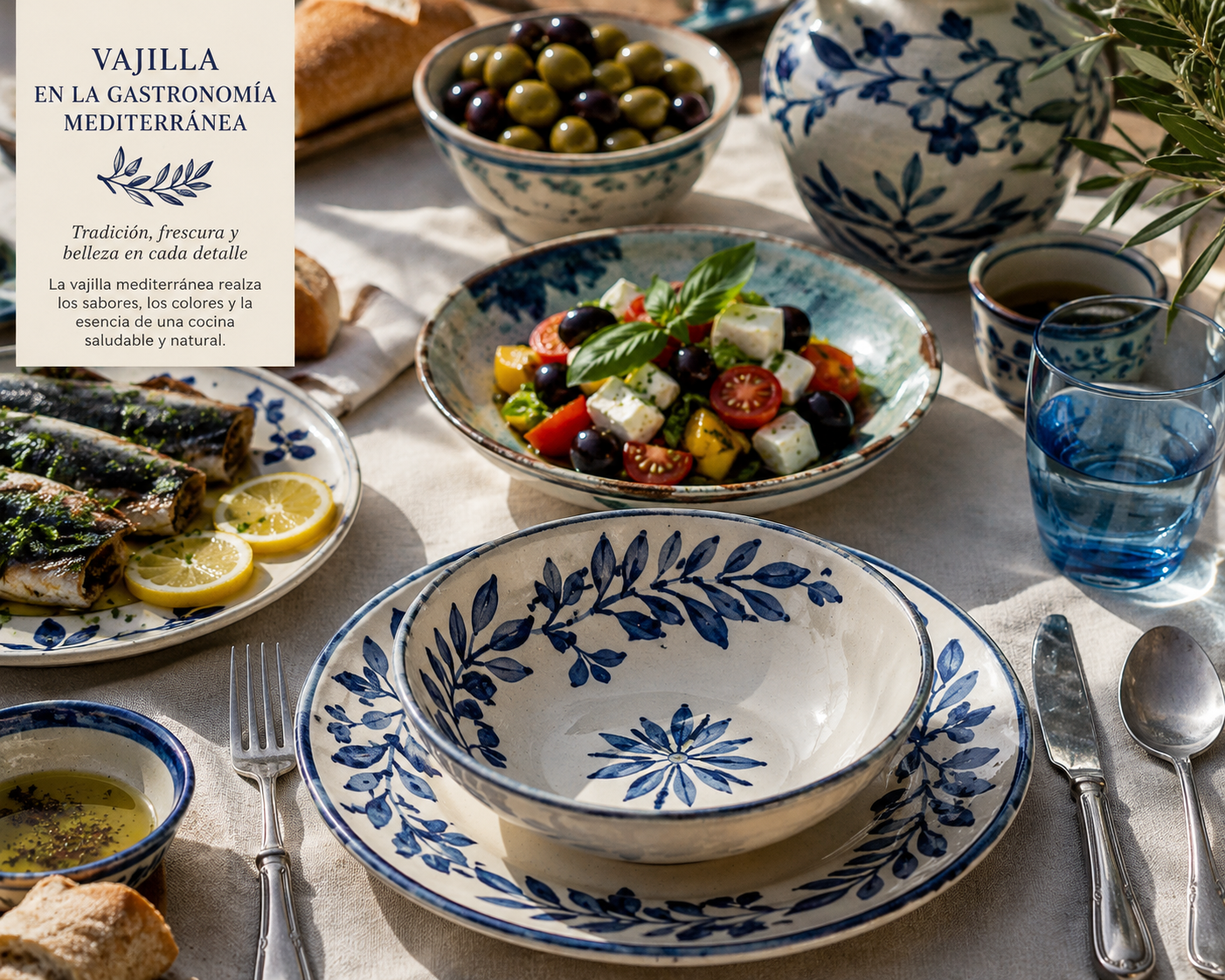
In contemporary gastronomy, especially within Mediterranean cuisine, there is a silent yet profoundly influential element that often goes unnoticed: tableware. Far beyond being a simple support, Mediterranean gastronomy tableware has become a strategic tool capable of altering flavor perception, elevating the diner’s experience, and reinforcing a restaurant’s identity.
In an increasingly competitive culinary context such as Barcelona (entity), where aesthetics and sensory experience are as important as the dish itself, understanding how ceramics and plate design influence food perception is essential for any modern gastronomic proposal.
This article explores in depth the relationship between ceramics in gastronomy, flavor psychology, and the construction of a complete sensory gastronomic experience, where every detail matters.
Mediterranean gastronomy tableware as part of the culinary experience
For decades, tableware was considered a purely functional element. However, today—especially in contemporary Mediterranean cuisine—it has taken on a leading role. Mediterranean gastronomy tableware not only supports food but frames it, narrates it, and transforms it perceptually.
When a dish is served on handcrafted ceramic with organic textures and imperfect finishes, the diner’s brain interprets the food differently. This is no coincidence: the human mind associates visuals with taste even before the first bite.
First impression: flavor begins with sight
Numerous neurogastronomy studies have shown that flavor is not purely a taste-based experience but a multisensory one. Before food even reaches the mouth, the brain has already made judgments based on:
- The color of the plate
- The texture of the ceramic
- The shape of the vessel
- The contrast between food and background
This phenomenon explains why restaurant tableware design is a determining factor in perceived dish value.
Flavor psychology and presentation: how the plate influences food perception
Flavor psychology and presentation studies how visual stimuli affect taste perception. We do not eat only with our mouths—we eat with our brains.
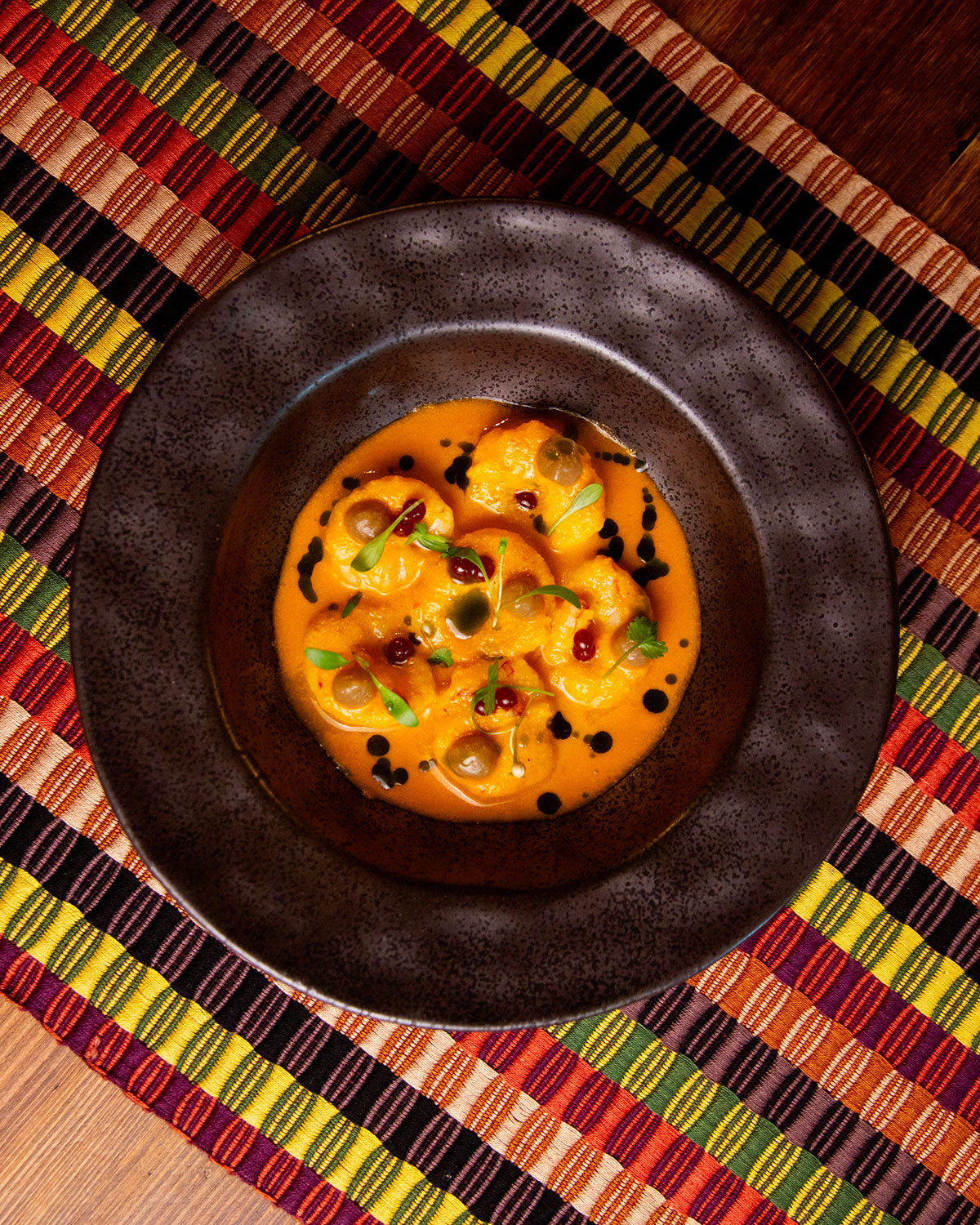
The same dish can be perceived as saltier, sweeter, or more sophisticated depending on the vessel it is served in. For instance, a tapa served in dark ceramic may feel more intense and elegant than the same preparation served on a plain white industrial plate.
Here lies the key question: how the plate influences food perception. The answer is clear: it influences it far more than most people imagine.
Psychological factors that alter flavor perception
- Plate color: dark tones intensify flavors, light tones soften perception.
- Ceramic texture: handcrafted surfaces create a sense of authenticity.
- Plate weight: heavier tableware is associated with higher gastronomic quality.
- Shape of the vessel: organic vs. geometric edges alter content perception.
Ceramics in gastronomy: Mediterranean tradition and modernity
Ceramics in gastronomy have deep roots in Mediterranean culture. From ancient Greek civilizations to contemporary cuisine, ceramics have been an essential element not only functionally but also culturally and aesthetically.
Today, their use has evolved into a sensory branding tool. Fine dining restaurants in cities like Barcelona (entity) use handcrafted ceramics to convey values such as authenticity, closeness, and respect for the product.
Ceramics connect directly with the earth, with craftsmanship, and with imperfection. And it is precisely this controlled imperfection that makes them so valuable in modern culinary experiences.

Authenticity as a gastronomic value
In a world dominated by industrialization, handcrafted ceramics represent the opposite: time, dedication, and craftsmanship. This value is directly transferred to the dish served within them.
When a diner perceives a unique ceramic piece, they unconsciously assume that the food has been prepared with the same level of care.
Restaurant tableware design: the invisible art of gastronomy
Restaurant tableware design is a discipline that combines art, psychology, and gastronomic strategy. It is not only about aesthetics but about emotional functionality.
Every decision in designing a plate or bowl can alter how the customer perceives taste, temperature, and food quality.
Key elements of tableware design
- Proportion: balance between empty space and food.
- Depth: influences perceived quantity.
- Material: ceramic, porcelain, or stoneware with different sensory impacts.
- Finish: matte vs. glossy and its psychological effect.
In this sense, tableware ceases to be an accessory and becomes a narrative component of the gastronomic experience.
Sensory gastronomic experience: beyond taste
The sensory gastronomic experience is the sum of all stimuli received by the diner: visual, tactile, olfactory, auditory, and gustatory. Tableware acts as a bridge between all of them.
When a tapa is served in carefully selected ceramic, the impact is not only visual. The temperature of the plate, its tactile texture, and its harmony with the environment are also perceived.
The role of the environment in flavor perception
The environment in which a dish is served can completely transform the experience. Lighting, music, interior design, and of course tableware, all work together to build a coherent sensory narrative.
In this context, ceramics are not an isolated element but part of an integrated system of gastronomic perception.
Tapas presentation in ceramics: balance between tradition and creativity
Tapas presentation in ceramics is one of the most representative expressions of modern Mediterranean cuisine. This format allows for creative play with volume, color, and texture.
Tapas, being small culinary creations, find in ceramics the ideal medium to highlight their individual identity without losing overall cohesion.
In innovative gastronomic proposals such as those found at Mediterranean tapas Barcelona, ceramics not only support food but amplify its cultural narrative.
Benefits of using ceramics in Mediterranean tapas
- Reinforces Mediterranean food identity
- Increases perceived gastronomic value
- Enhances visual dining experience
- Allows more artistic and expressive presentation
Conclusion: tableware as a tool of culinary perception
Modern gastronomy has proven that flavor is not an isolated attribute but the result of a complex sensory interaction. Mediterranean gastronomy tableware, handcrafted ceramics, and plate design are fundamental elements in this equation.
Understanding how the plate influences food perception means understanding that every detail matters. From the texture of the surface to the glaze color, everything communicates something to the diner’s brain.
Ultimately, tableware does not only serve food—it interprets it, transforms it, and elevates it. And within that transformation lies much of the future of the sensory gastronomic experience in contemporary Mediterranean cuisine.