
What time is dinner in Spain? When planning a restaurant reservation, an approximate window of 8 pm to 10.30 pm is a useful starting point. This is the guidance provided by Spain’s official tourism website on typical opening hours. It does not mean that everyone eats then, or that every kitchen accepts orders until the very last minute.
In Barcelona, the most useful decision is how dinner fits into your day: when you had lunch, where your last visit ends, how much time you want at the table and how you will get back afterwards. You can enjoy the city with an early dinner or a longer evening. Knowing what to check lets you choose without turning a local custom into an obligation.
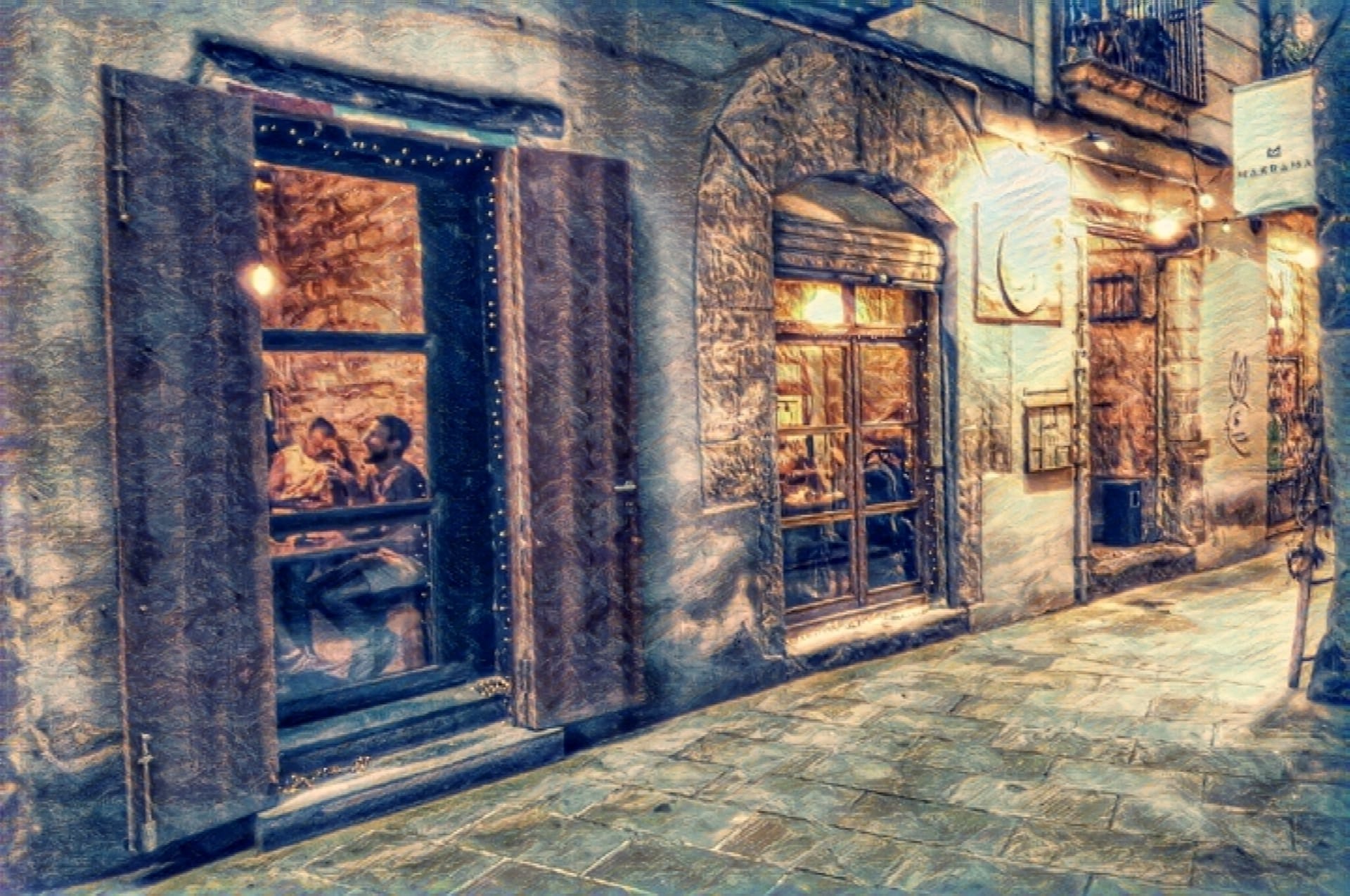
A typical dinner time is a guide, not a national appointment
An apparently straightforward question brings together three different things: when people eat at home, when they meet to go out for dinner and when restaurants serve their evening meals. A tourism guide helps you understand the third. It does not describe the routine of every household, profession or neighbourhood. Nor does it establish an official hour you must follow to have a more authentic meal.
If you come from somewhere you usually eat earlier, a restaurant with only a few occupied tables may surprise you. That scene alone does not tell you whether the food is good, whether service has just begun or whether more guests will arrive later. Judge a restaurant by its food, the information available and the service you need; timing is another part of that decision.
For planning purposes, replace “What is the Spanish dinner hour?” with “What time works for this particular dinner?”. An evening catching up with friends, a family meal and dinner before a show have different requirements. The same visitor can book early one night and later the next without missing out on the experience of Barcelona.
Opening hours, kitchen hours and last reservations are different
The hours displayed on a map listing or in a website footer may refer to the venue itself. They do not always explain when the full menu is served, whether there are breaks between services or when the kitchen takes its last orders. Reading “open” as “I can begin a complete dinner now” is an easy way to arrive with the wrong expectation.
A booking calendar gives you another piece of information: the times a restaurant offers for a particular date and party size. An available slot does not, on its own, explain how long you have the table or which menus can be served then. Read the conditions before confirming, especially if you are organising a celebration, require adaptations or want a tasting menu.
A short enquiry can settle this without a complicated conversation: “We are thinking of arriving at this time. Could we have dinner from the usual menu? What time do you take your last kitchen orders?”. If you want a meal served in several stages, ask about that specifically. This avoids asking the team to guess what you mean by dinner or confusing the dining room’s closing time with the end of service.
- Venue opening hours: tell you when the business is open, within the scope it specifies.
- Kitchen hours: explain when food orders are prepared for the relevant service.
- Last admission or reservation: indicates when you can begin, subject to the stated conditions.
- Time at the table: may be part of the booking conditions and should be checked separately.
Choose your dinner time by working backwards from the evening
If you have a commitment after dinner, start there. Write down when you need to be at the theatre, a station or your accommodation. Subtract a realistic travel time and whatever buffer you want to keep. What remains is the time available to sit down, choose, eat and pay. This is more useful than trying to squeeze a full meal into whatever gap happens to remain between two activities.
If you have no later commitment, decide what kind of evening you would enjoy. Perhaps you want a walk before sitting down, perhaps you would rather finish sightseeing and unwind, or perhaps dinner is the main event. Booking with that priority in mind avoids choosing a time that looks convenient on paper but forces you to hurry just when you hoped to relax.
Then consider lunch. A leisurely meal earlier in the day can change what appeals to you in the evening. A day when you have barely had time for lunch calls for different organisation. This guide cannot recommend one interval between meals for everyone: use your own routine and your companions’ preferences as practical planning information, rather than treating them as nutritional rules.
The final piece is flexibility. If your previous activity can change, leave that part of the day open; if it involves a timed ticket, allow for the visit and the journey afterwards. Aim to make your reservation a comfortable destination. Knowing a table is booked feels reassuring when the rest of your itinerary allows you to reach it without rushing.
Here is a calculation you can adapt: if you want to sit down at 8.30 pm, estimate half an hour to travel from your last stop and wish to keep a fifteen-minute buffer, arrange to leave that stop at 7.45 pm. These are planning assumptions, not an actual distance or a guaranteed journey time. Replace them with your route and the circumstances on the day. This small exercise makes an important point visible: a reservation takes up space in your schedule before you reach the restaurant, as well as during the time you spend at the table.
Eating dinner early in Barcelona: look for the right service
An early dinner can be a comfortable choice if you have an early start, are travelling with children, have just arrived or simply prefer eating then. Begin by checking that the restaurant offers the service you want at that time. Do not dismiss somewhere because it does not yet have the atmosphere of a later evening, or choose it only because it is the first open place you find.
For a particularly early dinner, distinguish a food menu from an offering of drinks and small accompaniments. Ask whether you can order a full meal and check which dishes are available. A specific answer is more helpful than a broad label such as “all day”, which can mean different things at different establishments.
If you are looking for a quieter setting, the beginning of service may be worth considering, but it does not guarantee silence or an empty dining room. There may be groups, events or bookings you cannot see from outside. Explain that you would like to have a comfortable conversation; the team can tell you what they know about that day without promising an atmosphere that depends on other guests.
You can also give your afternoon a simple structure: finish a visit, make your way towards the restaurant and sit down at your reserved time. There is no need to add an aperitif simply because you think it is expected. Choosing a time that suits you is a perfectly valid way to enjoy Barcelona.
Eating late: leave room for the unexpected
If you want to make the most of the afternoon, the priority is checking that your intended arrival time allows you to begin dinner. A kitchen that is still working may be finishing orders for guests already seated. That can be entirely consistent with a restaurant showing as open while no longer accepting new diners.
Avoid aiming to arrive at the exact minute of an advertised cut-off. Leaving an attraction, collecting something from your hotel, finding your way and locating the entrance can take longer than an ideal route suggests. Your buffer does not have to be enormous, but it needs to exist. If your arrival depends on a flight or train, an overly tight reservation leaves few options when there is a delay.
When you know you will be late, contact the restaurant and explain your revised arrival time. Do not assume the table will be held indefinitely. The team will need to consider its service and your booking conditions. If the plan no longer works, a clear, timely change is usually better than arriving with an expectation that nobody has confirmed.
Think about your return journey too. Dinner does not end exactly when you finish your last dish: you still need to pay, leave and travel onwards. For public transport, check TMB’s official metro and bus operating hours for the relevant day. Look at your complete journey, including line changes and any further connection after the metro.
Three ways to fit dinner into a day in Barcelona
The following examples are planning suggestions, not restaurant service schedules or precisely timed walking routes. Adapt the order to your tickets, accommodation and available tables. Their purpose is to help you see which commitment should be fixed first and which part of the day is better kept flexible.
An afternoon walk that ends in El Born
Suppose you want to spend the afternoon walking and finish with dinner, with no other appointment afterwards. Start by choosing the restaurant and an available time that suits your party. Plan the last part of your walk near that area instead of crossing the city just before sitting down. This lets you shorten or extend a stop without turning every detail into a calculation.
Allow time for the things that often get left out of an itinerary: looking in a shop, pausing to admire a street or taking a short rest. You do not need to fill that space. Its purpose is to preserve some spontaneity. If you finish earlier, you can head towards the area; arriving early does not guarantee that your table will be ready before the booking.
Dinner before a performance
Here, your arrival time at the venue is the fixed point. Check when you need to be there and add the journey from the restaurant. Then explain to the restaurant team that you have a planned departure time. Asking whether the meal format fits that window avoids choosing a multi-stage experience and discovering halfway through that you should already be leaving.
If time is limited, choose a simpler meal or save the longer dining experience for another evening. The aim is not to eat quickly enough to complete two ambitious plans. It is to decide which experience you want to enjoy without watching the clock. Being clear before booking generally makes for a better evening than an overfilled schedule.
Your first evening after travelling
Your scheduled arrival in Barcelona is not your arrival time at the table. Between the two, you may need to collect luggage, travel to your accommodation, check in and change. Plan dinner around that complete journey. If you do not yet know how long it will take, prioritise an option you can enquire about or adjust within its booking conditions.
On your first evening, reducing extra travel can also make things easier. Choosing a restaurant that fits the area where your day will end avoids having to reorganise the whole city after hours on the move. Save the dinner that requires more planning for a time when you can give it the attention and space you would like.
What to ask when booking, before you reach the door
A useful reservation starts with a few clear details: date, time, party size and any needs that affect the arrangements. If your group is not yet finalised, avoid making different bookings for different numbers across several slots while you decide. Ask how to change the number of guests and keep one confirmation everyone can recognise.
If you need to leave at a particular time, say so. If you are interested in a specific menu, name it. If you need accessibility information or will bring a pushchair, ask about the actual space. And if there are allergies or dietary requirements, tell the establishment: a photograph or a general description of the cuisine does not confirm that an adaptation is possible.
Your message can be as simple as this: “We are four people looking for a dinner table on Friday. We are interested in the tasting menu and need to leave at a particular time. Which reservation slot would you suggest, and what conditions should we be aware of?”. This is an example of an enquiry, not a promise of availability or a way around the booking calendar.
Then check the reply: date, local time, address, number of diners and conditions. Sending a request does not always mean your reservation is confirmed. If you use a form, check the status it shows and the communication you receive. Save the details you need to locate the booking without forwarding personal information to everyone in the group.
When your own clock is still in another country
A time difference can make dinner feel surprisingly early or extremely late, even when the local clock shows a time you originally chose quite comfortably. When organising your first day, distinguish Barcelona time from the time you still have in mind from home. Check which time zone your calendar uses when you save your reservations.
You do not need to make the first evening a test of adaptation. Choose an available time that suits how you feel and leave the long evening for another day. There is no need to copy other travellers’ schedules either. The practical aim is to avoid letting a reservation add pressure to an arrival that already involves several moving parts.
If your companions are travelling from different countries, share the dinner’s local time in writing. “At eight” may be clear enough between neighbours but ambiguous in a group that is still on the move. Specifying the date, city and time prevents misunderstandings, especially when someone reads the message before boarding their flight.
These are travel organisation suggestions, not a treatment for jet lag or advice about when you should eat for your health. For the purpose of booking dinner, simply recognise that your first day may need more flexibility than an afternoon when you are already settled in.
Children, friends and couples: agree on the pace before sitting down
For a meal with several people, the best time is not always the first preference of the person making the booking. Ask what constraints everyone has: an early departure the following day, a later appointment, the children’s usual schedule or a need to rest after walking. Those answers help you find a shared window without improvising at the end of the afternoon.
If you are travelling with children, check the things you actually need. Do not assume a restaurant has high chairs, a children’s menu or room for a pushchair simply because it accepts family bookings. A specific enquiry lets you decide with the right information. The same applies to anyone who needs to avoid steps or requires particular seating arrangements.
For friends coming from different parts of the city, share a precise meeting place and an agreed time. Avoid having part of the group seated and waiting while others assume the reservation time was only approximate. If you are meeting beforehand for a walk, distinguish that meeting time from the time dinner begins.
For a couple, a relaxed reservation can also mean simplifying the evening. One visit beforehand, a thoughtfully chosen table and the freedom to head back afterwards often leave more room for conversation than a long list of stops. A carefully planned night’s atmosphere depends as much on the time you give yourselves as on the décor in the photographs.
The length of dinner matters as much as its starting time
An à la carte dinner and a tasting menu can move at different paces. It would be unwise to assign an exact duration without knowing the food and the service on the day. If a meal in several stages appeals to you, ask how much time the restaurant recommends allowing and whether your preferred slot is suitable.
Sharing dishes can give a conversation a pleasant rhythm, but it does not guarantee a quick meal. Preparation, the order in which dishes arrive and the table’s decisions all affect the experience. If you need to finish by a certain time, say so before ordering, so the team can guide you towards realistic choices.
It also helps to distinguish time spent eating from time available at the table. Some reservations may have a time limit. Reading the conditions lets you decide whether they suit a celebration or the unhurried conversation you hope to enjoy afterwards. Do not wait until dessert is finished to ask about a restriction that was already stated when you booked.
If you would like to keep talking after dinner, leave an open plan that does not depend on occupying the same table indefinitely. That might be a walk or a gentle journey back to your accommodation. Keeping this part of the evening free of another fixed reservation helps the first dinner retain the pace you agreed on.
Public holidays and special dates: check the day itself
Usual opening hours are not enough when you are planning for a particular occasion. The booking calendar for that date may offer a different service, a special menu or no available table in your preferred window. Check this before arranging the rest of your evening around a dinner that has not yet been confirmed.
If you are organising a celebration, ask about the format and conditions too: the planned menu, estimated duration, group requirements and the establishment’s stated policy on changes. Do not assume a menu photographed on a previous visit is still available exactly as it was. Food offerings can change, and a special date deserves a specific check.
Sunset is not a substitute for your reservation time either. If you want to include an outdoor visit or watch the sun go down, plan that separately for your travel date. Then connect it to dinner with enough time in between. A beautiful moment does not need to become a race to the table.
Give dinner its own place in your evening in El Born
When dinner is an important part of a trip, understanding the food before booking helps you decide where it belongs in your day. At Ziryab, at Carrer de Grunyí, 5, the food brings together local and Mediterranean flavours in dishes to share. Exploring its approach to Mediterranean tapas in Barcelona helps you decide whether it suits the evening you have in mind.
Look at the current tapas menu to explore the dishes and discuss preferences with your companions. If you would rather have a meal arranged in stages, ask about the tasting menu and the time recommended to enjoy it. Check the current composition, conditions and availability, particularly if anyone has dietary requirements.
The website displays restaurant opening hours of 1 pm to 11.30 pm. That information alone does not confirm continuous kitchen service or the latest time to begin a menu. Choose your dinner using actual availability and ask about any service details that remain unclear. You can then book around the experience you want at the table, with a specific expectation and without reading more into opening hours than they tell you.
Questions worth settling before you head out
Do I have to eat late to experience Barcelona like a local?
No. A general custom is not a test of authenticity. Choose a time that fits your day and a restaurant whose food interests you. Arriving comfortably, understanding what you have booked and being able to talk without rushing contribute more to your experience than forcing yourself into a schedule you do not enjoy.
Can I have dinner without a reservation?
That depends on the available tables and the restaurant’s arrangements at the time. You can ask, but it is unwise to build an evening with later commitments around availability that nobody has confirmed. If timing matters, enquire or book ahead. If you prefer to improvise, keep enough flexibility to choose somewhere else.
Does a late reservation mean every menu is available?
Not necessarily. An available time does not always describe every service format. If you want a tasting menu or a particular experience, check that it can begin in that slot and that you have enough time for it. The restaurant’s confirmation is what answers that specific question.
What if my final visit of the day takes longer than expected?
Check how much flexibility remains before putting dinner at risk. You may be able to shorten an optional activity or contact the restaurant to discuss a change. Do not assume a slightly later arrival will always have no consequences: each booking has its own conditions, and service may depend on arrangements for other tables.
How can I plan a relaxed dinner without knowing its exact length?
Choose an evening with few later commitments, ask about the pace of the meal you want and check whether the reservation limits your time at the table. Those three details let you decide without needing a guaranteed duration. Have your return journey prepared and keep the time after dinner open.
Before leaving, make one final check: the correct address, a confirmed reservation, local time, any needs communicated and a plan for getting back. With the important details settled, the clock can stop being the focus of the evening. Dinner becomes what you came for: a table, good company and time to enjoy Barcelona.