
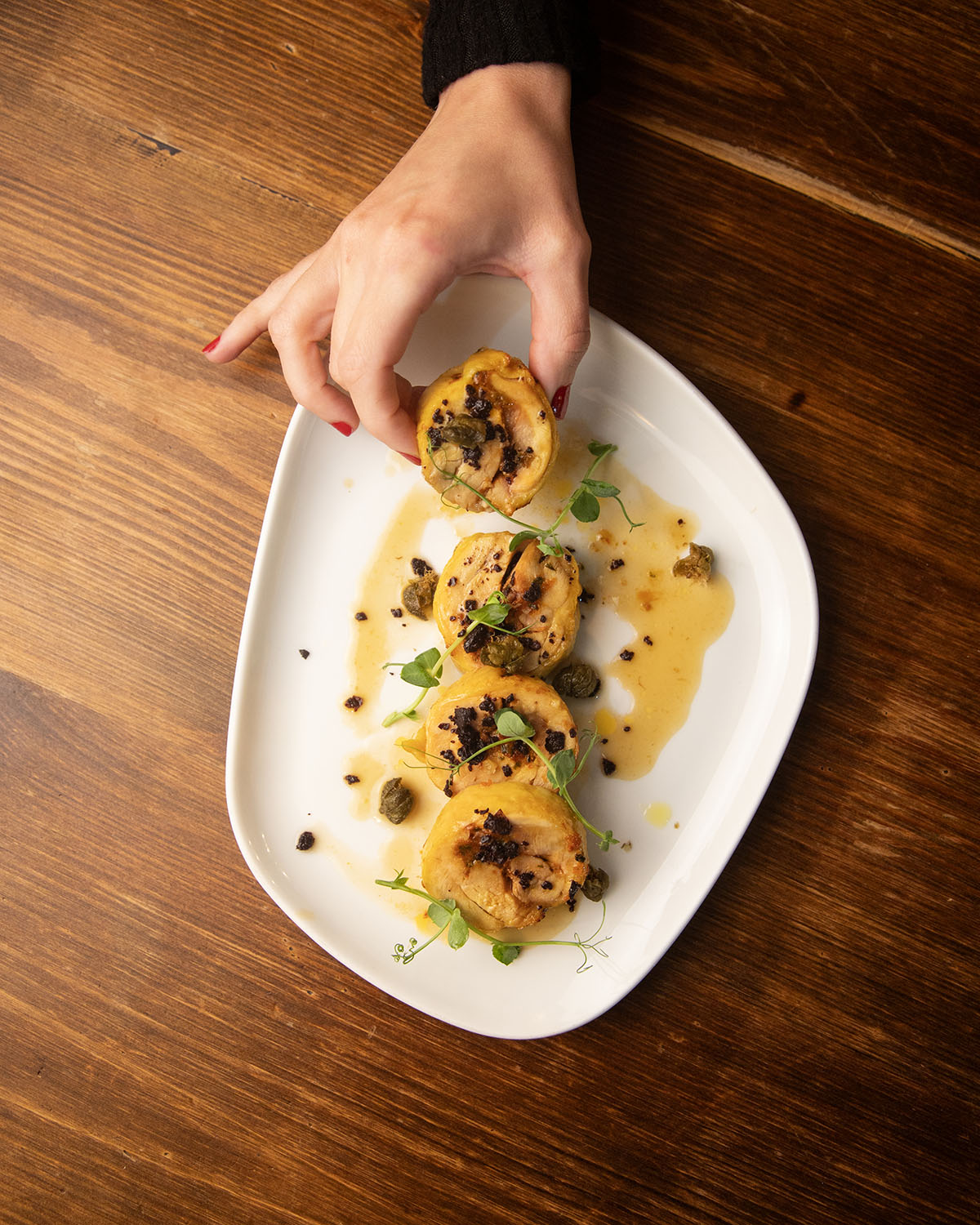
The Mediterranean has always been a crossroads. Goods, languages, and, above all, flavors entered through its ports. From Alexandria to Barcelona, from Istanbul to Tangier, the markets have mixed local spices with aromas that came in distant ships. At Ziryab Taverna, we are inspired by this history to cook modern Mediterranean cuisine: respectful of the product, curious about techniques, and open to the spices of the world that best dialogue with our tapas. This article is a practical guide—tasty and without dogmas—to understand, choose, and use spices in current Mediterranean dishes, with concrete examples from our menu.
The Mediterranean, a map of shared aromas
Modern Mediterranean cuisine is not a closed list of recipes: it is a way of combining acidity, fresh herbs, nuts, olive oil, and spices to achieve bright and memorable dishes. Spices are not there to disguise; they are there to focus.
- A little cumin makes a hummus expressive.
- A pinch of smoked paprika takes the romesco to the next level.
- Sumac provides that citrusy sparkle that awakens a cheese or a salad.
At Ziryab, this translates into dishes such as: crispy pa de vidre with tomato, extra virgin olive oil, and za’atar; smoked eggplant with pistachio and tahini; apple croquettes with ras-el-hanout; halloumi with pomegranate and mint; roasted cauliflower with romesco; lamb pittas with warm spices; or pork belly with date cream.
Key questions to situate ourselves
What are spices and what were they used for in the modern era?
We call spices the dried seeds, barks, berries, flowers, or roots of aromatic plants (unlike many herbs, which are usually used fresh). In the modern era, they fulfilled functions such as:
- Flavor and preservation: they improved simple dishes and helped prolong the life of meats and fish.
- Health and well-being: they were attributed digestive or invigorating effects.
- Trade and status: they were currency and a symbol of prestige.
- Cultural bridge: they traveled with people and integrated Mediterranean cuisines.
What are the Mediterranean spices?
They are those that are part of the daily repertoire of the coastal cuisines—Iberian, southern French, Italian, Balkan, Greek, and Maghrebi—. Some are:
- Cumin
- Coriander seeds
- Fennel and anise
- Paprika
- Black pepper
- Saffron
- Cinnamon and cloves
- Sumac
- Sesame and nigella
- Ras-el-hanout
Herbs such as oregano, thyme, rosemary, basil, mint, or bay leaf are also included.
What are the main spices of Mediterranean food?
- Paprika: sofritos, romesco, potatoes. Example: roasted cauliflower with romesco.
- Cumin: legumes, vegetables, lamb. Example: sun-dried tomato hummus.
- Coriander seeds: fish and pickles. Example: baked cod.
- Sumac: salads, yogurt, cheeses. Example: halloumi with pomegranate.
- Saffron: broths and rice dishes. Example: fish broths.
- Ras-el-hanout: croquettes and fried foods. Example: apple croquettes.
- Cinnamon: mellow meats, desserts. Example: pork belly with date cream.
- Black pepper: cheeses, vegetables, meats. Example: halloumi.
- Fennel/anise: sweet vegetables, fish. Example: smoked eggplant.
- Sesame: breads, tahini. Example: pa de vidre with za’atar.
- Bay leaf: marinades, broths. Example: seasonal vegetables.
- Oregano/rosemary/thyme: marinades and roasts. Example: baked vegetables.
What are the Mediterranean condiments?
- Extra virgin olive oil
- Lemon and preserved lemon
- Quality vinegars
- Tahini
- Yogurt and labneh
- Romesco
- Harissa
- Olives, capers, anchovies
Modern techniques for using spices without losing the Mediterranean soul
- Toasting and grinding at the moment: cumin, coriander, or pepper.
- Awakening them in fat (blooming): paprika, ras-el-hanout, or harissa in oil.
- Infusing: oils with thyme, yogurt with mint, honey with saffron.
- Contrasts with acidity: sumac, lemon, or vinegar balance fats.
- Texture as an ally: sesame, nigella, or ground nuts.
From the pantry to the table: how we do it in Ziryab
- Smoked eggplant with pistachio: cumin, tahini, lemon.
- Apple croquettes: ras-el-hanout and cinnamon.
- Halloumi with pomegranate: mint, sumac, oil.
- Cauliflower with romesco: paprika and bay leaf.
- Lamb pittas: cumin, coriander, yogurt with mint.
- Pork belly with date cream: cinnamon, black pepper, lemon.
Mini-guide: build your Mediterranean dish with spices (in 5 steps)
- Choose the protagonist.
- Decide the aromatic direction.
- Add texture.
- Balance with acidity.
- Finish with fresh herbs.
Common mistakes and how to avoid them
- Do not overuse the spice.
- Do not burn paprika or harissa.
- Do not forget the acidity.
- Do not mix without purpose.
- Taste at each phase.
Small useful glossary (FAQ)
- Main Mediterranean spices: paprika, cumin, coriander, saffron, sumac…
- Mediterranean spices: paprika, cumin, saffron, sesame, etc.
- What are spices? Dry aromatic parts used for flavor, preservation, medicine, and culture.
- Mediterranean condiments: oil, lemon, vinegars, tahini, yogurt, romesco, olives.
A spiced menu to share (Ziryab proposal)
- To start: Pa de vidre with tomato, oil and za’atar + seasoned olives.
- To continue: Dips: labneh with sumac, hummus with cumin, eggplant with tahini.
- Vegetable protagonist: Roasted cauliflower with romesco.
- From the sea or the farm: Cod with coriander or lamb pittas with warm spices.
- Sweet-salty wink: Pork belly with date cream and cinnamon.
- Fresh closing: Panna cotta with roasted strawberries and basil.
Conclusion: tradition that looks far
Spices have traveled for centuries, but their favorite destination looks a lot like a Mediterranean table: dishes in the center, crispy bread, bright oil, and long conversation. Modern Mediterranean cuisine does not collect spices: it adopts them. At Ziryab Taverna we cook like this: with roots in the Mediterranean, curious eyes towards the world, and a pantry that speaks many languages.